Showing posts with label Jordan Rosenfeld. Show all posts

Sunday, December 23, 2018

Interview with Professor Awesome: Annotated

I had a rollicking good time talking with Professor Richard Scott Nokes over Skype on December 8th, 2018.

After finishing the interview, I realized that I had forgotten to bring up a few things I wanted to mention. I gave a lot of advice on the writing process and thought hyperlinks might be helpful for those interested in following up on them.

One aspect of the interview that makes this a little out of the ordinary was the time spent getting the tech stuff working.  We spent over half an hour trying to get the Skype application to record. After several failed attempts, Professor Nokes got it working. He started to record, but I didn't see the banner at the top indicating it was recording. I didn't want us to begin talking in earnest and have to start all over again.

I mention this because that mistake on my part is the first half minute of the video. After we stopped talking Professor Nokes spent about an hour editing the raw footage and uploaded the unedited raw footage. D'oh!

What you really missed was the cool introductory musical theme song that precedes his interviews. To get you in the proper mood, here is the music you should hear before his interviews:


And here is a re-posting of the interview with time stamps of my annotations.


At 2:04 I mention that my series is based on the legends of Charlemagne that were told and retold in the south of France and north of Italy for several centuries. For those interested in learning more, Fordham University has a website dedicated to those legends.

2:55 I mention one of the most famous contributions to the legends of Charlemagne, The Song of Roland or La Chanson de Roland. Here is a link to Fordham University's online translation and a link to Amazon.com's trade paperback version.

3:50 I show my copies of Barbara Reynolds' translations of Orlando furioso. Here are links to those copies on Amazon.com Part One and Part Two.  Those books are my preferred version of this epic poem. They are in verse and there is a lot of white space, so I find it easier to read. Guido Waldman has a one volume version, and it is written in prose. I find it difficult to read because the font is so small, and there is little white space. Here is a link to his version on Amazon.com

A free online version by Project Gutenberg can be found at this link. A fair bit of warning though. This is the William Stewart Rose translation. I started reading this epic poem by printing out a few cantos of this version and found it utterly confusing. Later, once I read the versions by both Reynolds and Waldman, I went back and checked a few choice passages. Rose refused to translate some of the bawdier ones. Bummer.

(As a side note: I do not recommend the latest translation of Orlando furioso by David R. Slavitt. That is because his publisher heavily abridged his work and deleted numerous cantos that cover the Bradamante and Ruggiero story. I disagree with the editorial decision to cut my favorite storyline from the poem, and so I cannot recommend that version. )

5:50 Professor Awesome asks me to define Saracen. Here is a link to one online definition from the Online Etymology Dictionary.

I use Saracen in my title as one of the magic terms that helps to conjure the genre, time period and meaning of the novel in as few words as possible. Fate is reminiscent of the Oracle of Delphi and those in Greek mythology trying to change their destinies. Saracen is a term that went out of use after the Medieval period. Knight is also a Medieval term used in regard to war and chivalry.

Together the three terms should help readers know this is an epic historic fantasy set in the Medieval period.

8:50 I show my copy of Orlando innamorato by Matteo Maria Boiardo, translated by Charles Stanley Ross. This is the full unabridged version by Parlor Press. Here is a link to Amazon.com's trade paperpack.

Warning: there is a previous edition by Ross that was abridged and did not include Book III of Boiardo's tale. Bradamante and Ruggiero meet in Book III, Canto iv. I was disappointed after finishing that abridged version to realize that it did not include the scene that I most wanted to read.

10:00 Discussion about fantasy elements in realistic settings.  I realize in retrospect, I didn't really answer Professor Awesome's questions about this aspect of my story.

I agree that it is difficult to strike a balance between fantasy and realism. I am retelling a story about a war that never took place between the North African Muslim army and Charlemagne's Frankish army. My goal was to make the setting feel like Medieval Europe (and North Africa) that would include historically accurate details about Roman artifacts, cultural beliefs, religious restrictions, etc. And then, there is magic, but few have the ability to cast magical spells. They are: Atallah, Melissa, and Maugis. Aistulf was given a magical book which has allowed him to cast some spells, but he is not a wizard.

For the most part, the characters live in a realistic and non-magical world, but there are times when flights of fancy come into play. The flights of the hippogriff is the most notable.

Orlando furioso included iconic visits to the Underworld and the flight to the moon by Aistulf. I had to include them, but I wanted more realism in the storyline to at least help me to "buy the premise." I feel that if I can't buy it, I can't sell it.

22:15  I mentioned writing a Master's Thesis. For anyone interested in it, here's a link to Sonoma State University's library copy of The Cultural Evolution of the Cave Man.

And here is a link to the Fifth year Harry Potter Fic that I wrote back in 2003.  It won the Readers' Choice Award for novel length story on the now defunct website Portkey.org

24:30 Question about how to begin becoming a writer.

25:15 My answer: find a writers group or club. I mentioned the California Writers Club.  My branch of that statewide organization is Redwood Writers.

Here are links to other writers groups that focus on genre fiction:
Romance Writers of America. 
Sisters in Crime.
Historical Novel Society.
Science Fiction and Fantasy Writers of America


27:00  I mentioned the challenges of getting the Point of View or POV correct. To give a little more information here is one article about the differences in POV choices. Here is a link to an article about POV violations.

And here is where my annotation, really takes off. There are many other aspects of the craft of writing that I learned over the years from belonging to my writers club. My branch has had workshops about various topic as well as talks at our monthly meetings or sessions in writers conferences. Each one of these topics is worthy of extensive blog posts or entire books.

Here are two books that I recommend:

David Corbett's book: The Art of Character 
Jordan E. Rosenfeld's book Make a Scene

Other topics that perhaps I should try to expand on as topics in the future include:

Compelling dialogue
Pacing
Plotting
Establishing setting


***One thing that I meant to bring up in my discussion with Professor Awesome, but forgot are the sheets of paper affixed with blue painters tape to the wall behind me. Those are the months of June, July, August and September of the year 802. That was one way for me to determine when different plot events took place.

The calendar was found at www.timeanddate.com This also includes the phases of the moon.  I include that information in my story. If there's a mention of a full moon, I'm not making it up. And, if I have my characters do something outdoors at night and I don't want a full moon's worth of light - I will make it rain or overcast or foggy.

Using a calendar to structure your underlying plot will give backbone to your story. I recommend all writers have a beginning day and year in mind. Then establish your timeline of events accordingly to that date. It will help you to avoid continuity errors.

I had a friend whose manuscript I read as a critique group partner. Her novel had the climax of her story being on the Thanksgiving holiday. The problem was that she had not been as careful in planning the events as she should have been and she had two Wednesdays worth of chapters. There was a line where she stated it was Wednesday, but I knew it wasn't. That's because I ground myself on the days of the week and other nitpicky details. I then gave suggestions as to how she could move certain events to still make her climactic events happen on the day she wanted.

The use of a calendar to determine the dates of plot points is something I recommend every writer use.  

The calendars on my office wall are hard to see, but the events in the months of July and August
are written in pencil, because those already took place in Quest of the Warrior Maiden. Fate of the Saracen Knight takes place in the months of July and August. The different color Post-It notes represent different character POVs that are being represented in chapters or are background information for me to know who was where and doing what on that day. For example: blue is for Bradamante, dark orange is for Ruggiero, yellow is either Renaud or Aistulf, light orange is for Rodomont or Akramont.

I tend to write one action/adventure sequence before switching to a different character's action/adventure sequence. Later, to balance the work I will shuffle the chapters together. To achieve balance, I may have to switch the days of different plot points. Having those plot points on color coded Post-It notes helps me visually re-organize and balance my storyline.

Once I start working on Volume III, I will update those calendars and create new months. ***

 32:30 I couldn't remember the name of this website that is accessible to all writers wherever you are: Absolute Write online website. There is also Absolute Write Chat and forums.

Wattpad is another global forum for writers and readers.

So if you live in a rural area and/or cannot find any writers groups in your local area you can try one of those two online websites. Go schmooze, find like minded people and engage with them.

38:30 I recommended the book Audition: Everything an Actor Needs to Know to Get the Part by Michael Shurtleff. Oops. There are twelve guideposts for actors, I misspoke and said ten. Humor is Guidepost 4. Here is a small excerpt to demonstrate why I adore Shurtleff's book and his advice.

"Humor is not jokes. It is that attitude toward being alive without which you would long ago have jumped off the Fifty-ninth Street Bridge.

Humor is not being funny. It is the coin of exchange between human beings that makes it possible for us to get through the day. Humor exists even in the humorless.

There is humor in every scene, just as there is in every situation in life. There is humor in Chekhov (too seldom found) and even in Eugene O'Neill (virtually never found). When we say about a life situation, "And it's not funny, either," we are attempting to inject humor into a situation that lacks it. We try in life to put humor everywhere; if we didn't, we couldn't bear to live." - page 53
So yes, as writers, we need humor in our writing. Even if the only humor in a scene is gallows humor.

44:30 There was a mention of Medieval Conferences. I twice attended the International Congress on Medieval Studies at Western Michigan University in Kalamazoo, Michigan. I delivered papers about Carolingian legends and Ariosto. I will be delivering another paper in May 2019 in a session organized by the Société Rencesvals. My paper is titled "To Die For: Duels by knights in Orlando innamorato and Orlando furioso over swords, horses, heraldic symbols, and women."

I delivered the paper "Orlando furioso's archetypes and the twisting of expected plot conventions" at the 15th Triennial Congress of the International Courtly Literature Society in 2016. 
Here is the website for the International Courtly Literature Society North American Branch and to Academia.edu if you are interested in seeing my paper.


( I should at some point finish writing citations of the two papers I delivered at Kalamazoo and upload them to Academia.edu. One of my papers, "Ludovico Ariosto’s Legacy: Inspiring Countless Artists, Playwrights, Novelists, Filmmakers, and Puppet Theater" was filled with images and the challenge I have is finding good online sources for those images and then go through the cumbersome process of MLA citation. That shows my work ethic that I don't want to publish a paper online without my citations being in order. That will probably wait until some rainy day when I am procrastinating from doing other writing.)


I think that's all for now.

Here's a reminder that the both Quest of the Warrior Maiden and Fate of the Saracen Knight are discounted in the month of December. If you know someone who loves reading and would like to fill their physical or digital bookshelves, please send them the gift of reading. Or give yourself a gift and be transported back to the time of Charlemagne.

Cheers,

Linda
-->


Wednesday, February 6, 2013

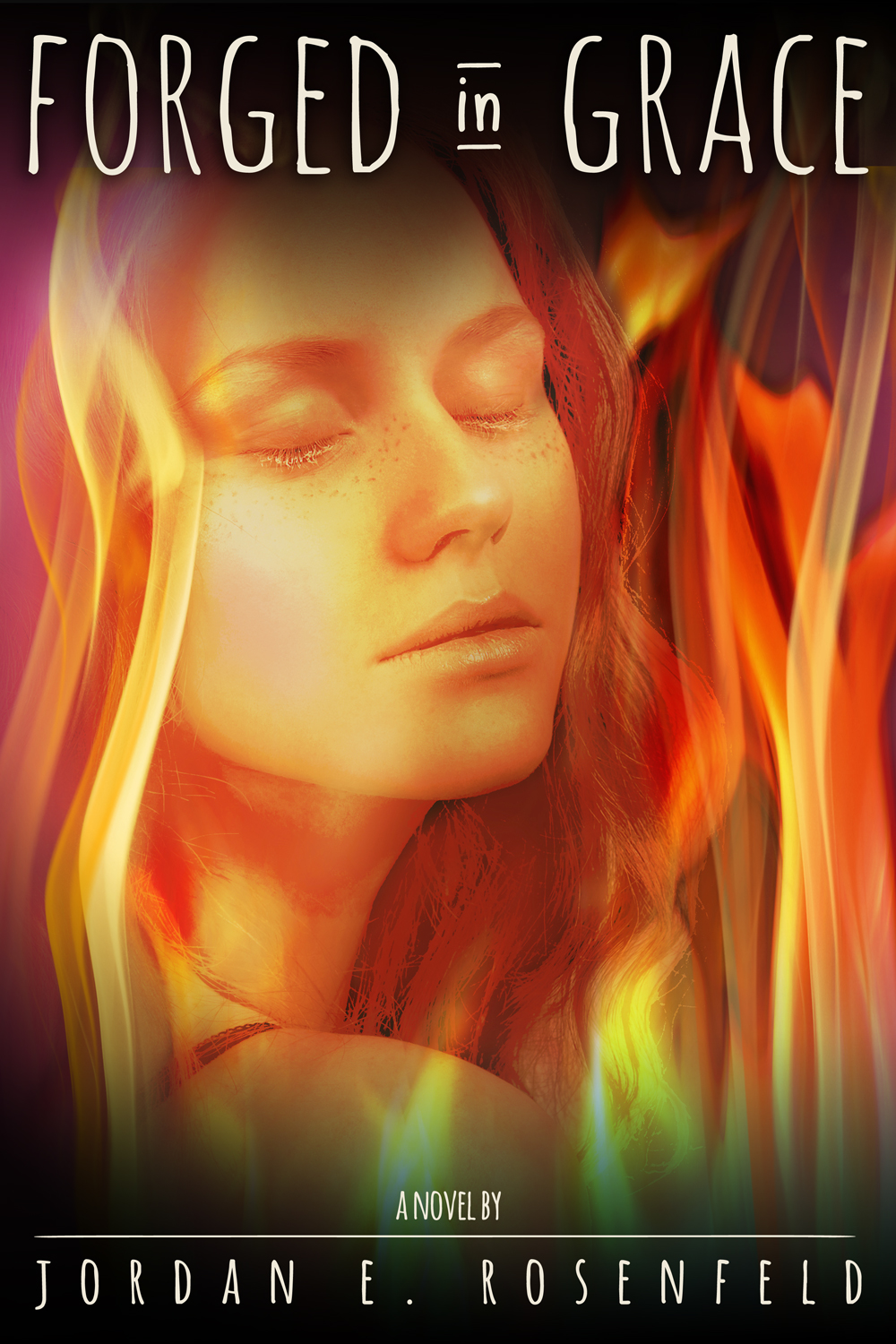
Forged in Grace by Jordan Rosenfeld

"Jordan E. Rosenfeld’s  luminous, edgy debut is dark, searingly-written, and ultimately redemptive. Forged in Grace startled me at every breathtaking turn." - Patry Francis, author of The Liar's Diary


My friend Jordan Rosenfeld's debut novel Forged in Grace publication date is February 28th.

Here is a description:

Grace Jensen survived a horrific fire at age 15. The flames changed her: badly scarred in body and mind, Grace developed an ability to feel other people’s pain. Unable to bear human touch, she has made a small life for herself in Northern California, living with her hoarder mother, tending wounded animals, and falling a little in love with her former doctor. Her safe world explodes when the magnetic Marly Kennet reappears in town; Grace falls right back into the dynamic of their complicated friendship. Marly is the holder of many secrets, including one that has haunted Grace for over a decade: what really happened the night of the fire?

When Marly exhorts Grace to join her in Las Vegas, to make up for the years they have been lost to each other, Grace takes a leap of faith and goes. Although Marly is not entirely honest about her intentions, neither woman anticipates that enlarging Grace’s world will magnify her ability to sense the suffering of others—or that she will begin to heal wounds by swallowing her own pain and laying her hands on the afflicted. This gift soon turns darker when the truth of Marly’s life—and the real reason she ended her friendship with Grace—pushes the boundaries of loyalty and exposes both women to danger.

FORGED IN GRACE gives a new twist to the idea of reuniting with an old flame—literally. Exploring ruptured female friendships as in Leah Stewart’s The Myth of You and Me with the dark psychology (and twist of the inexplicable) found in Donna Tartt’s The Secret History, FORGED IN GRACE will resonate with anyone who has wanted to set the past right.

To help build momentum for the release date, Jordan is highlighting the work of some of her literary friends and offering free copies of their work through daily literary trivia questions.

Today an electronic copy of my novel Quest of the Warrior Maiden will be given away to the first person who correctly answers the trivia question posted on her blog.  She also has a Facebook author page you can "like" and a link will appear there as well.


Jordan had been an influential part of the Sonoma County literary scene when I first met her. She had created a literary salon in Petaluma as well as a literary radio program on our local National Public Radio station. 

She has moved out of Sonoma County, but her influence is still felt here. Last night an interview with Jordan about her forthcoming novel was aired on KRCB Radio by Gil Mansergh, the new host of "Word by Word." It will be available in a few days as a downloadable podcast from the station's website and through iTunes. (I will add a link once that is put online.)

Jordan has written many articles that have appeared in such publications as Writer's Digest Magazine including a cover story interview with New York Times best selling author Tess Gerritsen. She has several nonfiction books on writing including the wonderful Make a Scene: crafting a powerful story one scene at a time published by Writers Digest Books.


She has returned several times to our county to be a speaker at Redwood Writers meetings and workshops. Here is a photo of her from the 2009 Winter Editing Workshops where she discussed the importance of writing powerful scenes.


Jordan has not only done her own writing, but is a successful freelance editor. I am one of her many satisfied clients in that regard.

One more thing I wanted to mention is that Jordan also teaches online writing classes with lessons and assignments to bring out the best in your writing.  She has a Revise for Publication class starting February 18th. So if your New Year's Resolution was to shape up your NaNoWriMo manuscript into something publishable - consider this as Opportunity Knocking on your front door.

I wish Jordan well in the launch of her novel.  Bonne chance mon ami!

Edited to add links to her book that is now available.

Kindle
Trade paperback on Amazon
Nook
Smashwords


http://lcmccabe.blogspot.com/2013/02/forged-in-grace-by-jordan-rosenfeld.html

Wednesday, March 25, 2009

A varied topic mixture of writing opportunities, insights, and changes in publishing

There are a few things that have either come into my inbox or across my proverbial radar screen that I think others would benefit from and hence this post.

My friends Jordan Rosenfeld and Becca Lawton are sponsoring "playshops" to help inspire the creative spark in writers. It is a philosophy where enjoyment of the writing process with a sense of play is emphasized over the traditional terminology of "workshops." Plus you do not have to turn anything in, it is simply to help inspire your innate creative energy.

Here is their description:

Month-Long Write Free Playshops: Playing toward Publication
Join us each month for Write Free Month-Long Playshops in which you exercise your creative chops and aim for your publishing dreams. These month-long, self-paced Write Free Playshops begin on the first Monday of every month. Every weekday for four weeks (20 days) the following activities will be sent to you in a daily e-mail (except for the Weekly Message, which will come once a week):

  • Write Free Writing Prompt to jumpstart your own personal freewrite for the day
  • Quote on Attraction to inspire and align you with your best creative life
  • Word of the Day to spark your imagination
  • Exercises to work new writing muscles
  • Weekly Message from Jordan and Becca on writing craft, practice, and community.

All this for $19.95-less than $1/day for the whole month!


There was a nice write up about the program in a column recently in my local paper.

To sign up for the playshop, click here.

--

For those who live in Northern California, the San Francisco chapter of the Women's National Book Association is sponsoring a "Meet the Agents and Publishers" event this Saturday, March 28th. There are eight publishing professionals who are confirmed to be there ready to hear your pitches. Both fiction and nonfiction are covered.

--

My friend Lee Lofland has an incredibly useful blog for those who have any aspect of police procedurals in their writing. It is not my genre, but I still find the posts fascinating.

Yesterday, Lee's post showed that he can be just as nitpicky as I am. He dissected a television episode into ten separate segments for analysis. He judged the veracity of various details à la American Idol style. Simon Cowell features prominently.

I have never watched the show in question, but I found Lee's take (and/or spit take) on the show to be highly entertaining.

On the same day, Lee showed a different side when he did a guest post "It's Not All Donuts and Paperwork" on Terry Odell's blog. Lee starts out calmly describing how he started in law enforcement, but his story gets harrowing when he describes how he handled a crisis situation which could have easily gone horribly wrong.

I hadn't known that story before, and it increased my admiration of him.

--

I haven't seen much discussion about this recent publishing news and was wondering if any academics reading this blog might chime in with their thoughts.

According to the online Publisher's Weekly:

The University of Michigan Press sent shock waves through the academic publishing field Monday when it announced it is switching to a primarily digital format to publish scholarly monographs. The press expects that within two years, most of the 60 monographs it publishes each year out of a total 140 new releases will be published only in digital editions. A POD option, however, will be made available for all digital books, said University of Michigan Press director Phil Pochoda. He said the press’s regional titles and its ESL list will continue to be released primarily in print editions, though select frontlist, as well as backlist, will be made available in digital formats as well as print. Print runs consequently will be more conservative, to cut down on returns. “We’re going to try to keep [initial] print runs close to orders,” Pochoda said, with more of a reliance on offset printing for smaller print runs.


My question is: How will this impact university libraries? Will they start purchasing PDF files of those academic monographs and will they be easily accessed by professors and students?

Or will the libraries wind up using the print-on-demand (POD) option?

These types of cost cutting changes can have far ranging consequences and I wonder if everything has been thought through prior to "going digital" and abandoning the printed page.

--

And that brings me to a recent blog post by Tess Gerritsen.

She wrote about what might be a similar trend by publishers in regard to galleys.

Tess is a New York Times bestselling author who will write blurbs to help up and coming writers. (Lee Lofland is one of her grateful recipients of her Karmic generosity.)

However, there is a limit to anyone's generosity. Recently she received an email from a publisher who announced they were no longer going to produce printed galleys.

She understands that it is cheaper and greener, but she doesn't want to read a novel at her computer nor does she want a handheld reader.

Tess loves being able to read galleys in bed, on a beach, on vacation, etc.

She feels so strongly about this that she wrote:

I think that printed galleys are part of the cost of doing business as a publisher. If you don’t print galleys, you shouldn’t expect to get any cover blurbs.


Wow.

And this email came after a novelist had approached Tess and she agreed she would consider giving him a blurb. No promises, but she would try. She never guarantees blurbs because she has a lot of demands on her time and has to find some kind of work/life balance.

Now because of the change of policy by the publisher, that author's forthcoming book will absolutely not have a blurb by Tess Gerritsen.

That makes me wonder how much discussion was generated in the board rooms as to what side-effects they would have by this change in their business practices. Did they think about how it might deter their ability to generate blurbs from established authors. And subsequently how that might impact future book sales?

Did those considerations of the "human element" even factor into their debates or was this a decision based solely on the bottom line of postage and printing costs?

What makes matters worse is that email message went on to suggest recipients of printed galleys attempt to profit by the sale of ARCs on Ebay and other such sites. As if recouping a few bucks on Ebay would be worth Tess Gerritsen's time.

They also wanted her guarantee she would read the PDF galley before they would send her the file.

In one impolitic email message they not only insulted her integrity and professionalism, but they made it unlikely that she would ever provide their authors blurbs in the future.

Nice job!

It would have been far better if they had asked her if she preferred a printed galley or a digital copy because there are many people who love their Kindles and Sony Readers. She doesn't happen to be one of them.

What does the future of publishing hold if choice is not an option?


Tuesday, February 3, 2009

Setting, Scenes and Book Signings

Jean Hegland

I have mentioned before on this blog how much I enjoy belonging to a writers club. It is the process of interacting with others who share my obsession with the written word that inspires the creative flame within me.

This past weekend my club sponsored the second of three editing workshops and had its monthly meeting.

So I saw writing friends and colleagues on both Saturday and Sunday. On the drive home Sunday night I felt euphoric.

Things had gone fabulously and I had some incredible new insights that will inform my future writing and that I wanted to share with my blog readers.

Jean Hegland, author of Into the Forest, led a workshop regarding the importance of setting. She began with the situation of a person waking up from a coma and that the first thing they would ask is, "Where am I?"

That is the question that a writer needs to answer when they begin a story or a scene so that the reader will know whether it is day or night, what season, what year, whether it is indoors or outdoors and where this scene takes place geographically. Because each choice has an impact on the overall story.

Setting gives a story verisimilitude when it takes readers to a place they have not been before or if it is to a place in which they are familiar. It is vitally important to get the details right for if you choose a real location and say you put a grocery store on the wrong side of the road, those who know the area will complain.

Jean then gave an example of how important it is choosing settings for individual scenes and how by playing with your choices you can change the tone and meaning of a scene.

She referenced Jordan Rosenfeld's earlier workshop about scenes and Jordan's insistence that a scene not be comprised of "talking heads in space" and that each scene involve some action. Then Jean gave an example of an action such as a couple having sex where the setting chosen would reveal character.

The actions by the characters could be written the same, but depending on the setting the meaning and the tone of the scene would be different.

The following were the three different settings she used to illustrate her point:

1) a cemetery (ewwww)
2)
a bedroom
3) a boardroom

During that discussion I could not help but blurt out my "ewwww" comment in the class, which led to a nice round of laughter from the group. Camaraderie among writers is a wonderful thing.

Jordan Rosenfeld

Now onto the subject of scenes which was Jordan Rosenfeld's topic. She described scenes as the building blocks of a story similar to beads on a wire. Meaning that each scene needs to be complete in and of itself and it is the stringing together of the scenes that create the overall story.

Each scene should be comprised of:

action
character
POV (point of view) in which the scene is communicated
new information revealed
conflict and drama
and it must take place in a tangible setting

In other words: No talking heads in space!

She also stressed that not only is the first scene in your book important to hook your readers, but that as each character of any relevance is introduced that you must take the time to recognize that this is their first scene. Writers must reveal something compelling about each important new character without resorting to a data dump summary.

Jordan feels that it is better to give such information via dialogue and action than by summary. Ye olde "show don't tell" maxim.

She described dramatic tension as a sense of danger, complexity, mystery and a sense of discovery. Each scene should have some dramatic tension. She also stressed the need for variety in the style of scenes so that there are peaks and valleys in the tempo or else the reader will become either fatigued or bored.

Plot is created in relationship to the scenes. She gave a list of 4 D's for plot revelation that each scene must include at least one of these:

Dialogue
Discovery
Demonstration (such as a flash of unexpected anger)
Devices - e.g. letters or memorabilia

She described a well balanced scene as one where the reader is:

not confused
knows the setting
knows the characters
there is tension and drama

The time to change a scene is denote a break with time, place or POV. That can be done with a full chapter break or by using a blank space within a chapter to signify the change.

For those interested in knowing more about Jordan's thoughts on scenes, you can buy her excellent book Make a Scene

by Writers Digest Books at your local bookstore or available online.

Then on Sunday at the monthly meeting of my writers club we had Stephanie Deignan the events coordinator of Copperfield's Books come and speak.

Stephanie Deignan

For several years now I had wanted to schedule a speaker who could give the bookstore's point of view in regard to author appearances. I had approached two other events coordinators in the past to give such a talk, but they declined. So I was excited when last summer I spoke with Stephanie on the phone and she accepted.

I wanted our members to know how to go about getting an event scheduled, what to expect in regard to publicizing from the bookstore, and what their responsibilities are in order to have a successful event.

Stephanie started by saying that we should all be aware that bookstores are understaffed and underpaid and so when you approach a bookseller in the hopes of arranging a signing, you need to be understanding and patient. The information that you need is to discover the name of the events coordinator, their phone number and email address. Do not bother the harried bookseller with the information about you or your book as it will probably get lost in the shuffle.

In your initial contact via phone (most likely a voice mail message) and email you should include your name, your contact information, the title of your book, the publisher information, give a brief synopsis about what the book is about, any publicity information such as radio interviews scheduled, any published reviews, as well as book distribution information. Mention if it is carried by Ingram, Baker and Taylor or a smaller independent publishing distributor or if it is a POD title (print on demand) which would necessitate being on consignment.

Then be patient and wait for a few days or so to hear back. Be professional and be willing to call back if necessary. Again, they are short staffed and bookstore employees are trying their best.

Stephanie at some point discussed the difficulty bookstores have with PODs titles because generally they are non-returnable. Bookstores will order POD titles for customers if it is paid at the time of ordering, but they do not want to be stuck with books they cannot return and might never be able to sell.

The different kinds of author events were described as "traditional author talks" where an author talks about their book, does a short reading, a question and answer session and then signs books versus "meet and greets" where a table is set up and an author can interact with customers in a more informal setting and talk one on one instead of to a group.

She said that for authors who are not yet established would find it easier to have a "meet and greet" scheduled than an "author talk." If for no other reason than it causes less havoc for booksellers since they do not have to rearrange the bookshelves in the store to make room for chairs for people who may or may not show up to the signing.

She admitted that the emphasis that bookstores give to publicizing their author events is tiered depending on the name recognition of the authors. Those who are big named authors are given "A list" treatment and more time is spent on trying to generate crowds. Then publicizing for "B list" and "C list" authors are by necessity given less time and energy. This comes back to the reality of being understaffed.

That means that a large onus of publicizing the events rests on the shoulders of authors. Once you have a scheduled event, you must do as much to publicize as you can by utilizing the old tried and true methods of fliers, posters, and postcards, as well as newer media such as online events calendars, keeping an up-to-date website with your events listings, and social media such as Facebook and blogs.

She also stressed the influence that radio interviews can have in making the events a success. If you should be lucky enough to score a radio interview with someone like Michael Krasny of KQED Radio - who has an audience known for being book buying fiends - be sure to let a bookstore know so that they can buy adequate stock. Recently an author returned for a signing and after having been interviewed on Krasny's show and he drew a significantly larger crowd than the had the year before with a previous title. The problem was that the publicist did not alert the store and there were not enough books on hand to meet demand.

Which is why authors should always carry at least a box of books with them to signings...just in case. You never know when a bookstore's order might not come through on time due to blizzards in the midwest or strikes by UPS, etc.

(A few side notes: if you are lucky enough to score a radio interview prior to a book signing, do not forget to mention your scheduled book store event including the date, time and location. That is what will bring people into the store and get their butts in the seats for your signing! And if you want to know more about what to expect with talk radio and radio interviews you can read an old post of mine on the subject of the Do's and Don'ts of Talk Radio.)

On the day of your event you should call the store early in the day to confirm, arrive early and check in with a bookseller. You should bring a sign up sheet for those who would like to be on your mailing list as well as fliers to any upcoming events such as workshops or conferences. You should also bring postcards with the cover of your book, business cards and even book marks with your website and blog addresses. Make it easy for people who are interested in you to follow your career.

Stephanie suggested an event drawing between five to ten people for small authors is doing good. She also said that if there is a ratio of 30%-50% of books sold to the number of attendees present than it is a successful signing.

During the discussion with our members, Persia Woolley mentioned another reason for authors to always be prepared. One time she went to a signing and the author never showed. The audience was getting restless and being a trooper - she offered to pitch in and give a talk about her book. The events coordinator was thrilled to have someone save the day and she had the opportunity to talk to an audience she otherwise would not have had.

Stephanie thought that was great of Persia to help out in that manner.

Persia then said that the favor wound up being returned by another author when she got lost trying to find a small venue. She arrived late after finally getting directions from someone at a gas station and discovered that another author had warmed up the crowd in the interim. (Another reason for authors to keep a box of books in the trunk of your car. You just never know when you will get a chance to sign and sell them!)

Stephanie was asked about timing of when to start trying to schedule events at bookstores and she thought that two months before publication would be a good time to start. Then on the other end is how long you have before the books start getting returned. That happens at about three months post publication for hardcovers and six months for everything else. So after about a year of publication unless your book has really taken off, it will be hard to interest a bookstore in doing an event.

Her last words of wisdom on the subject was to enjoy yourself and make it fun.


Tuesday, September 9, 2008

East of Eden Writers Conference - Wrap Up

This past weekend I was in Steinbeck Country and attended the East of Eden Writers Conference that was organized by the South Bay Writers branch of the California Writers Club.

I find going to writers conferences to be invigorating since I am surrounded by creative minds who are just as obsessed with the written word as I am.

It is also a great opportunity to meet, schmooze and network with other writers. That is only the first part. The follow through after the conference is over is just as important.

For example, four years ago at the East of Eden Conference, I met Lee Lofland. He's a retired detective with over twenty years experience in law enforcement. He is now the proud author of the Macavity nominated book Police Procedure and Investigation: A guide for writers.


We chatted, I made a few networking suggestions for him and we exchanged business cards. He followed up later with an email to me and we have kept in contact ever since.

Whenever I see something that reminds me of what one of my friends is working on, I pass that information on in the hopes of helping them.

With that in mind, a few months back I saw a post about agent Verna Dreisbach on the Guide to Literary Agents blog. All I needed to see was a mention of Verna having a background in law enforcement for me to immediately forward that post to Lee. I knew Lee should get in contact with Verna. She might not become his literary agent, but I was certain they could work together in some capacity.

They are.

Both will be participants in the upcoming Police Writers Academy to be held in April 2009. Lee has the details of that conference on his blog.

So at the East of Eden Conference, Lee returned the favor and introduced me to Verna. He then told her that I was the one responsible for him knowing about her.


After talking with Verna I discovered that she worked in the Sonoma County Sheriff's Department and lived in the town where I now work. 'Tis a small world indeed.

At the first workshop session, I attended Hallie Ephron's discussion about POV and different ways it can be done.

I wound up making a comment in that venue which she liked. Later I ran into her in the hall and she saw me and said, "you seem to know what you are doing." That comment thrilled me as it meant that a published author thought I made a cogent point. Yay, me!

We exchanged business cards and later on, I tried to introduce Lee to Hallie. I did not realize that they were friends already. They both live in the Boston area, and have been friends for awhile.

After dinner and keynote speakers there were late night sessions held at a nearby hotel. I attended one about mystery writing. Lee and Hallie were on a panel with David Corbett and Terri Thayer.

One aspect that I love about the California Writers Club is that we are open to writers of all genres. That means we interact and learn from writers who are working on different styles and conventions of writing. I look at it as cross-pollination of ideas and as the lines of genres blur, I think it is even more important to learn whatever we can from other creative people.

So even though I do not currently write mysteries, I enjoyed hearing this panel of speakers.


Left to right: Terri Thayer, David Corbett, Hallie Ephron, Lee Lofland.

I had a great time listening to the panelists and their freewheeling style. It was informative and entertaining.

David Corbett has a wicked sense of humor and I look forward to reading his book Blood of Paradise which has been nominated for the following awards:

The Edgar
Anthony
Macavity
Shamus

I wish him well and hope that he wins at least one of those awards. David was cracking so many jokes that after the session ended when I had a chance to talk with him, he got a little friendly with me. While Ana Manwaring was trying to figure out how to work my camera, David was grabbing my side. Hence the huge grin on my face.


Here is Ana Manwaring and David "watch his hands" Corbett.


David gave a wonderful and rousing speech the next morning as a keynote speaker about the importance of respecting the genre.


The next morning my new friend Molly Dwyer and I started chatting with people who sat down at our table for breakfast. We soon realized they were "techies" and the conversation was soon on the topic of using the internet to publicize yourself and your writing.


Left to right: Matilda Butler, Martha Alderson, Molly Dwyer and Kendra Bonnett.

And here is Kendra Bonnett explaining about why she Twitters.


At lunch Hallie Ephron spoke about what it was like to have grown up in a family of writers and how that impacted her own confidence in writing.


Now just some pictures of writing friends. Here is Jana McBurney-Lin author of My Half of the Sky.

Here is Dionne Obeso and Charlotte Cook of KOMENAR Publishing.

Here I am with Jordan Rosenfeld. This was her first major literary event for Jordan since she became a mother in June.


Then at the gala banquet that night I schmoozed with Martha Alderson.


Hallie Ephron then came over to share with us how giddy she was to have met the banquet's keynote speaker Jane Smiley. It is nice to know that everyone can become giddy at meeting someone they admire.


Then here is Hallie posing with me and my "peeps" from my writers club.


Left to right: Me, Hallie Ephron, Ana Manwaring, Kerry Granshaw.


Hallie Ephron and Lee Lofland

Here are the conference organizers as well as keynote speakers.

from left to right: Karen Joy Fowler, Edie Mathews, Kelly Harrison, Jane Smiley, Hallie Ephron


I will leave you with one of my favorite pictures from the conference. It is of me and Lee.


Write on!

Tuesday, January 29, 2008

Community, Compassion and Cancer: Patry Francis and The Liar's Diary

The world has over 6 billion people on it, and yet sometimes it feels like there are no strangers because a name you hear is known by a friend of yours. That makes them a friend of a friend.

Today approximately 300 bloggers have agreed to help out someone in need of support. That woman is Patry Francis. I do not know her, but she is a friend of my friend Jordan Rosenfeld.

Patry spent many years waiting tables, scratching out her thoughts on paper, toiling to improve her craft of writing. Finally she had succeeded in having a debut novel published in hardback. She achieved the success that I and many of my friends are still working toward. Her book The Liar's Diary was well reviewed and earned blurbs from such esteemed authors as Tess Gerritsen. Her book is now available in seven languages.


Patry should be celebrating her success and spending her time thinking up new characters for a follow up novel.

Instead, shortly after the publication of her book she was diagnosed with an aggressive form of cancer.

Cancer.

A word that strikes fear into the hearts and minds of anyone who has seen the ravages that disease can inflict on the human body.

I have had far too many of my friends and relatives touched by its various forms. Some have survived, some haven't.

My husband's mother is still locked in a valiant struggle with lung cancer. She was diagnosed at stage 4. Initially it was thought that she might last six months, but here she is two years later still showing how stubborn she can be. God bless her.

I know how tough it is for her to continually take poison into her veins with the hope it will kill the diseased cells and not the host. Changing treatment modalities every few months when the medications stop having the desired effect. Trying to plan her life when she does not know what the new side effects of medicines will be. She is often tethered to her bed and her bathroom for days at a time post-treatment, making it impossible to leave her house.

The pain. The morphine to relieve the pain. The endless sleeping that results when you take the narcotics.

And of course the depression.

Cancer is a cruel disease. To fight it you must be stubborn. You cannot be passive. You must have the will to live and desire to survive while forcing a life threatening disease into submission.

Or remission.

Even then, you will live with the Sword of Damocles hanging over your head always fearful that the cancer will return in a new form, in a new site, and force you to take up arms again renewing your warrior status.

Patry Francis is engaged right now in a life and death struggle with cancer.

Today is release of her book The Liar's Diary in paperback. It is far more important that she invest her energy in caring for her wounded body than spending it publicizing a book.

That is why there are over 300 bloggers banding together to help spread the word on Patry's behalf.

Here is a synopsis of The Liar's Diary from Patry's website.


Synopsis

What would you do if your best friend was murdered—and your teenaged son was accused of the crime? How far would you go to protect him? How many lies would you tell? Would you dare to admit the darkest truths—even to yourself?

Jeanne Cross is an ordinary suburban wife and mother with a seemingly "perfect" life when Ali Mather arrives on the scene, breaking all the rules and breaking hearts. Almost against her will, Jeanne is drawn to this powerfully seductive woman, a fascination that soon begins to infect Jeanne's husband as well as their teenaged son, Jamie.

Though their friendship seems unlikely and even dangerous to their mutual acquaintances, Ali and Jeanne are connected by deep emotional needs, vulnerabilities and long-held secrets that Ali has been privately recording in her diary.

The diary also holds the key to something darker. Though she can't prove it, Ali is convinced someone has been entering her house when she is not at home-and not with the usual intentions. What this burglar wants is nothing less than a piece of Ali's soul.

When Ali is found murdered, there are many suspects; but the evidence against Jamie Cross is overwhelming. Jeanne's personal probing leads her to the question none of us would ever want to face. What comes first: our loyalty to family—or the truth?"


The blog that organized this blogopolooza event on behalf of Patry Francis is Susan Henderson's Lit Park. Please go there, check out audio and video clips of the book and the list of bloggers who have joined the effort in helping Patry. There are also a variety of links to purchase the book depending on which vendor you prefer.

I have yet to read her book, but I shall remedy that soon. Today also marks my mother's 76th birthday and I am fortunate enough to still have both my parents. I had wondered what gift to get my mother, but once I heard about this blogging event and realized the significance of the date, my decision was clear.

My mother will be receiving copy of The Liar's Diary.

Be well Patry. Many people are in your corner, whether they know you personally or not.

Be well and Live Strong.

Linda

Tuesday, December 11, 2007

This holiday season, the colors are Red and Black

Left to right: Pat Tyler, JuanitaMartin, Gil Mansergh, Jennie Butler, Debbie Koehler, Linda McCabe, Deborah Taylor-French, Ana Manwaring. Photo by Rob Koslowsky.


Today's blog entry is a fashion tip. It is not something I discovered by reading any magazine or newspaper column. Nope. It comes from my own personal experience of finding myself wearing the same exact outfit as three other people at a recent holiday gathering.

My writers club meets monthly and at our December meeting we had not only a guest speaker but a holiday celebration.

So I wanted to look festive for the occasion. I looked in my closet and pulled out one of my favorite blouses. It is fuschia colored and it looks appropriate in winter. I grabbed a pair of black slacks and then, as an afterthought I paired it with a black blazer.

My color scheme was black, fuschia and black. I thought it looked smart, albeit an uncomplicated look, but it worked for me.

I had no idea that it would be the most popular color scheme of the day.

Juanita Martin first brought that to my attention when she came up to me and said we dressed alike. I looked at her classic red sweater and at first I did not see the commonality. That's because I was stuck on fuschia not being really red. (I had to consciously consider that fuschia was closer to red than say yellow or green.)

Once I got past that temporary mental road block, I saw she was also wearing a black blazer, red shirt, and black slacks. Then I looked at Gil Mansergh and he was wearing the same color combination as well.

Then there were others wearing red and black so we had a group photo taken.

This is the second meeting in a row that Gil and I have dressed alike. In November we both wore camel colored blazers. I hardly ever wear that blazer, and yet that day I did. We looked like twins.

If Gil shows up in January wearing a teal dress to match me than I will really know that something fishy is going on with our wardrobes. (The mental picture of him in a dress is making my eyes cross.)

Seriously, we had a wonderful meeting and we were fortunate enough to have the lovely and talented Jordan Rosenfeld come and speak with us again. This time she had a brand spanking new book to sell and sign. We were in fact her second stop on her book launch.


She talked about her book and the various ingredients you need to create a good dramatic scene. While all of those things are important and I shall read her book once the crazy holiday season is over, I enjoyed her discussing how the book came to be.

Jordan has an MFA in Fiction and Literature and has yet to get any of her novels published. Yet, she has written many articles which have been published about the craft of writing in Writers Digest.

She joked about that, but it is what helped get her the book contract. Jordan was a known commodity to the editors because she had worked with them successfully in the past with articles.

Jordan came up the concept for the book after having worked as a freelance editor for several years and noting similar problems in many different manuscripts. She noticed that many writers found it difficult to create the integral building block of drama, otherwise known as "the scene." She looked through the large catalog of book titles that Writers Digest offered and she did not see one that addressed this topic.

She pitched them the idea. They liked it and then she put forth a proposal which they accepted.

Then all she had to do was write the book.

The old advice of "know your market" is something that Jordan's success story exemplified. She did not just send random queries out for an idea she thought up over breakfast. She identified a niche, she did her research, articulated her idea well, and had established her expertise and credibility with the publisher.

That is how you become successful. You need to know the industry, find your creative niche, and be professional every step of the way.


Left to Right: Juanita Martin, Linda McCabe, Jordan Rosenfeld, Karen Batchelor, Ana Manwaring, Kate Farrell
photo by Rob Koslowsky

Happy holidays everyone!

Linda

Sunday, November 25, 2007

Gift ideas for the holidays

In the spirit of trying to help my colleagues sell some books during this gift giving season, I am giving recommendations for books that you can either buy at a bookstore or order online. If you would like to support your local independent bookstore, but need help finding one check out this website or you can follow links from the author's websites and blogs to online retailers.

To help give some visual appeal, I'm including images of their cover art.


My friend Erika Mailman's first major novel was published in September by Random House.


Here is the review I posted of this novel on Amazon.com:

Human nature can be strange. The mentality of a mob for example, shows how brutal people can become when surrounded by others who are filled with passionate anger.

Erika Mailman shows us through the eyes of an elderly woman what it would have been like to live in the Middle Ages when witchcraft was thought to be the cause of any misfortune.

The famine described in this small village of Tierkinddorf, Germany is haunting. It made me feel strange reading the novel while having my lunch. I began to feel guilty knowing that the characters were willing to accuse others of witchcraft just to get a bite to eat.

A scapegoat was needed to place all the blame of the village's misfortune. It was thought that then, all things would revert back to days of plenty. That the famine would end.

The paranoia, the suspicion, the opportunity to point the finger of blame at someone whom you bear a grudge.

An accusation of milk spoiling was enough to damn someone to being burned to death, and you didn't even have to bring forth the spoiled milk as evidence. Your word was enough, if coupled with other such scurrilous complaints, to condemn someone to death.

Given today's sensibilities the thought of public execution is abhorrent. However, it is a gruesome part of our history that drawing and quarterings, beheadings, hangings, and burning at the stake were all done in the village square to serve as a lesson to all.

Beware or it may happen to you.

The Witch's Trinity is a potent tale whose ending surprised me.

I highly recommend it.

Erika's website is here and her blog can be found here.

--

Jordan Rosenfeld has a book that has just been published by Writers Digest and she will be a return guest speaker at my writers club next weekend. At that time I shall buy a signed copy of the book and be able to provide an informed review. Until that time, know that I have respect for Jordan's professionalism and have every confidence that her book will be filled with wonderful insight into the creative process. Here are links to her website and blog.

--

Lee Lofland's first book was also a Writers Digest book that was published in August.

Here is my review that I just submitted for Amazon:

This is a great reference book for writers who wish to understand police procedures. It is more than that though.

Lee explains how the hierarchy of law enforcement is structured between local police departments, sheriffs departments, the state police, the FBI, the ATF, the U.S. Marshals and more.

He also gives examples of terminology we all have heard and thought we understood. Such as the difference between a crime scene and the scene of a crime. They are different.

Or the difference between homicide, murder, and manslaughter. No they are not synonyms.

Yes, this book would make a fabulous gift for writers in your life that even want to barely touch on crime as an aspect in their work to help avoid making cringe-worthy mistakes, but it would also make a great gift for anyone who is interested in going into law enforcement.

It would be an excellent reference book for someone trying to understand all the new lingo and terminology involved in that profession. I have to think it would be better written than a lot of dry as sawdust textbooks on the subject.

Lee has a great sense of humor and it comes through on the page.

This is a great book even if you aren't interested in writing about crime or going into law enforcement, for it will help you to understand the occupational complexities of those who are sworn to protect and defend us.

Lee's website can be found here. He has several articles posted on his website, but unfortunately Lee does not maintain a blog. Occasionally he will do a guest spot on a blog, but he has not started to do it on his own yet.

--

Jeff Sypeck's wonderful book Becoming Charlemagne will be coming out in paperback just before the Christmas holiday. I would recommend either buying the hardcover version or pre-ordering the paperback with the hopes it will arrive in time to your intended recipient.

Here is my review from Amazon:

I've read many books on the Medieval period and Charlemagne in the last two years. This is now one of my favorites.

Jeff Sypeck put the events of the period in a context which allows the reader to understand the various political forces competing against one another during that era, and the skill used by King Charles which ultimately led to him being referred to as King Charles the Great or Charlemagne.

I had read mentions of Empress Irene of the Byzantine Empire before, but her villainy and treachery never really impressed me until reading Sypeck's version. This time it took on the magnitude worthy of Shakespearean tragedies.

The lives of Jews during the time of Charlemagne is a topic I had not seen mentioned at any length in the other various books I read, and Sypeck devoted a chapter to discussing how their treatment which by and large are hidden in the historical record. Charlemagne did not persecute Jews as he did those in his realm who worshiped pagan idols. Many Jews were educated, well-traveled, merchants, and officials in the royal courts.

One Jew was sent by Charlemagne as an ambassador to Baghdad to speak with the leader of the Muslim empire, Harun al-Rashid.

It is the various acts of political gifts from one leader to another (Harun to Charlemagne) which were then perceived as a political slight by other leaders (Empress Irene) that I found most fascinating.

And then there is the dramatic saga of Pope Leo III and his attempted assassination that underscores the dramatic story of Charlemagne's coronation as Emperor.

This isn't dry history with a simple recitation of facts, it is a story of intrigue brought to life.

You know that Shakespeare had to base his stories on something.

Jeff's website is here and his blog can be found here. He was fortunate enough to have a booksigning recorded and broadcast on C-SPAN 2's Book TV. You can watch that online here.

--

Ari Siletz's collection of short stories is now back in print. With all the saber rattling and demonization by members of the Bush administration against Iran, I think it is more important than ever that people read his book. Through gentle humor, Siletz shows the differences and similarities between Iranian and American culture.


Here is my review on Amazon:

Siletz has a graceful manner in telling stories that leads the reader into territory that feels unfamiliar at the outset, but brings understanding of the commonality of the human condition by the end.

His stories have an autobiographical feel to them, but they are fiction. They are based on his childhood experiences in Iran and are written with an eye towards enlightening American audiences about life in Iran.

One of my favorite stories was "The Dog" for it showed the cultural differences in how dogs are perceived between Iranians and Americans. The funniest aspect was showing how his Iranian family was surprised to hear that anyone could make money selling dog food, dog toys and dog soaps. Because dogs, while not forbidden are considered to be unclean.

A favorite line of mine was "Give a parched Iranian the choice between a glass of water sniffed by a dog and a glass of radioactive waste, and he will have to think about it."


Ari's website and blog can be found here.

--

For those Harry Potter fans who simply cannot get enough of the series and would like to contemplate deeper meanings to the story, I recommend John Granger's latest book:


Here is a slighted edited version of my review from Amazon:

John Granger has been one of the foremost champions of recognizing the importance of literary alchemy in the Harry Potter series. This is his fourth book examining and analyzing evidence from the wildly popular series.

Many people simply scratch their heads and say, "Alchemy? That weird pseudo-science that predated chemistry? The one where nuts tried to turn lead into gold?"

Yup, that's the one. Except John Granger goes on to explain exactly what alchemy was and wasn't, and why our perceptions of the secretive practice are skewed. He also convincingly argues that literary alchemy is a long-term practice by notable authors such as Shakespeare, Milton, Blake, C.S. Lewis and James Joyce.

Then he gives example after example of the evidence of alchemy in the Harry Potter books. Examples which cannot be simply coincidence.

There is a quote from an interview in 1998 that was recently "discovered" that confirms Jo Rowling's preoccupation with alchemy was found. Simpson, Anne. "Face to Face with J K Rowling: Casting a spell over young minds," The Herald, 7 December 1998

The money words are these:

"I've never wanted to be a witch, but an alchemist, now that's a different matter. To invent this wizard world, I've learned a ridiculous amount about alchemy. Perhaps much of it I'll never use in the books, but I have to know in detail what magic can and cannot do in order to set the parameters and establish the stories' internal logic." - J.K. Rowling

Bingo. In one fell swoop, John has been proven correct in his analysis that Jo Rowling uses literary alchemy in structuring her series.

Other ways to tell alchemy plays a large role in the Harry Potter books is by looking at the illustration he chose for the cover of this book. Do you see the Golden Snitch?

Buy his books, read them over, and then read the Harry Potter books again. You will then recognize that there are layers of meaning and structure beneath the text.

John's blog is here and the website for Zossima Press is here.

--

Teresa LeYung Ryan wrote a beautiful novel that is still available.

Here is another slightly edited version of my Amazon review:
Love Made of Heart is a wonderful book filled with emotion and drama from page 1.

I want to vicariously experience the lives of the characters while turning the pages. I want to laugh, to cry, to feel fully human and alive.

I want dramatic conflict. I want to read things that I would find terribly uncomfortable in real life. Conflict is drama.

This book has all of that, and it is done with grace and a deft touch. Anyone who has a mother should be able to recognize the various guilt trips that Ruby Lin's mother tries to repeatedly foist off on her. It rings true.

I look forward to reading LeYung Ryan's next book.

Teresa's website can be found here.

--

My father wrote his autobiography several years ago and it is an insightful book regarding dyslexia.


He is an amazing teacher. I have seen him sit down and work his magic with people who had given up on themselves and thought that they could never learn to read. It is simply amazing and if you would like to see him in action you can that here. Within a few minutes, he is able to get a student who thinks he cannot read into correctly reading the word "malicious."

Here is my review on Amazon:

Don McCabe writes a compelling autobiography to illustrate what it is like to grow up dyslexic. He was born in 1932 and this was well before "dyslexia" was a term, let alone a diagnosis. He was just treated as a boy who couldn't sit still. He credits his older sister and wonderful teachers who worked intensively with him to help him learn to read and eventually to become a respected scholar. McCabe has dedicated the last thirty years to working on literacy. This book is a quick, fun read that shows a good dose of humor helps in discussing serious topics such as dyslexia. If you or someone you love has been diagnosed as dyslexic, don't wring your hands in despair - buy this book and learn from someone who knows first hand about what it means to be a dyslexic.

My father's website which contains a wealth of information on literacy can be found here.

--

If you would like lighter fare, how about a joke book or two? My friend Rob Loughran has collected and perfected jokes over the last thirty odd years as a waiter. You can get them in small themed books or in one huge compendium.

It is filled with jokes guaranteed to offend and to make you laugh. Almost 700 pages worth of jokes. My father loved the copy I sent him a few years ago for Father's Day and he keeps it in his personal reading library (also known as the bathroom.)

You can buy Rob's joke books here.

--

Lastly, there is the latest anthology my writers club has released. It includes submissions by twenty-six members of the Redwood Writers branch of the California Writers Club including Rob Loughran and myself. I am partial and think it is a lovely book.


You can buy that here.

Here's hoping that my recommendations will help people in their quest to find a great gift for a friend or loved one or to supplement one's own bookshelf.

Linda